TECHNOLOGY OF ELECTRONICS
INTRODUCTION OF ELECTRONICS- Everything is made of atoms.Atoms consist of electrons,protons and nutrons.The electrons in conductive materials are free to move from
atom to atom.The electrons orbit the protons and neutrons in the nucleus.
Electronics technology is the application of scientific theories and principles in the design, production, installation, testing, service, use, and control of electrical and electronic parts, equipment and systems. Electronics technology is used across all industries, including commercial, residential, and industrial.
TYPES OF ELECTRONICS BRANCHES -There are many types of electronicS branches;
DIGITAL ELECTRONICS-
1.Analog electronics
2.Microelectronics
3.Circuit design
INTEGRATED CIRCUIT-
1.Power electronics
2.Optoelectronics
3.Semiconductor devices
4.Embedded system
5.Audio electronics
6.Telecommunication
7.Nanoelectronics
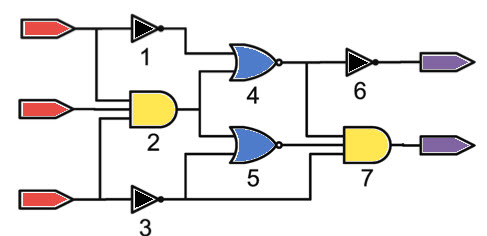
DIGITAL ELECTRONICS - Digital circuits are electric circuits based on a number of discrete voltage levels. Digital circuits are the most common physical representation of BOOLEAN ALGEBRA and are the basis of all digital computers. To most engineers, the terms "digital circuit", "digital system" and "logic" are interchangeable in the context of digital circuits. Most digital circuits use a binary system with two voltage levels labeled "0" and "1". Often logic "0" will be a lower voltage and referred to as "Low" while logic "1" is referred to as "High". However, some systems use the reverse definition ("0" is "High") or are currently based.
ELECTRONICS DEVICES AND COMPONENTS;
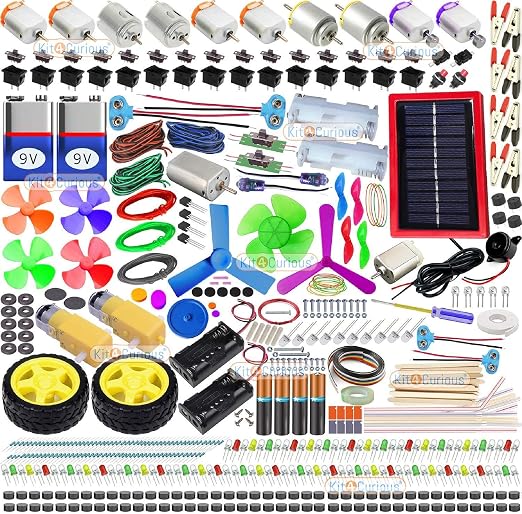
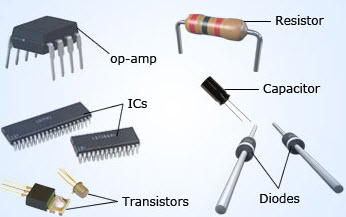
Some common electronic components are CAPACITORS, INDUCTORS.RESISTORS.DIODES.TRANSISTORS, etc. Components are often categorized as active (e.g. transistors and thyristors) or passive (e.g. resistors, diodes, inductors, and capacitors).
ANALOG CIRCUIT
Analog electronics (American English: analog electronics) are electronic systems with a ... Every digital circuit is also an analog circuit, in that the behavior of any digital circuit can be explained using the rules of analog circuits. ... enabled Analog design to be defined using software - which allows faster prototyping.
MICROELECTRONICS
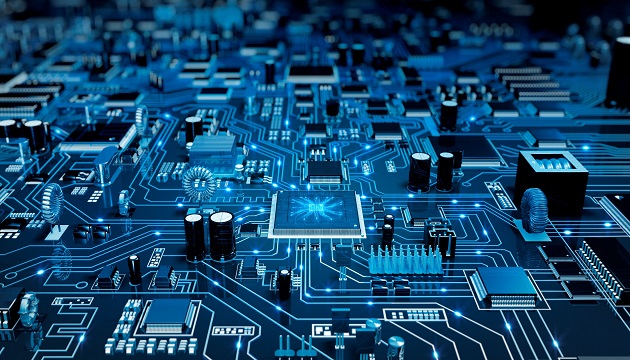
Microelectronics is a subfield of electronics. As the name suggests, microelectronics relates to the study and manufacture (or microfabrication) of very small electronic designs and components. Usually, but not always, this means micrometer-scale or smaller. These devices are typically made from semiconductor materials. Many components of the normal electronic design are available in a microelectronic equivalent. These include transistors, capacitors, inductors, resistors, diodes,
and (naturally) insulators and conductors can all be found in microelectronic devices. Unique wiring techniques such as wire bonding are also often used in microelectronics because of the unusually small size of the components, leads, and pads. This technique requires specialized equipment and is expensive.
CIRCUIT DESIGN;
The process of circuit design can cover systems ranging from complex electronic systems all the way down to the individual transistor within an integrated circuit. For simple circuits, the design process can often be done by one person without needing a planned or structured design process, but for more complex designs, teams of designers following a systematic approach with intelligently guided computer simulation are becoming increasingly common. In integrated circuit design automation, the term "circuit design" often refers to the step of the design cycle which outputs the schematics of the integrated circuit. Typically this is the step between logic design and physical design.
INTEGRATED CIRCUIT- Digital electronics is a field of electronics involving the study of digital signals and the engineering of devices that use or produce them. This is in contrast to analog electronics and analog signals.
Digital electronic circuits are usually made from large assemblies of logic gates, often packaged in integrated circuits. Complex devices may have simple electronic representations of Boolean logic functions.
POWER ELECTRONICS-
Power electronics is the application of solid-state electronics to the control and conversion of electric power.
The first high power electronic devices were mercury-arc valves In modern systems, the conversion is performed with semiconductor switching devices such as diodes and power transistors such as the MOSFET. In contrast to electronic systems concerned with transmission and processing of signals and data, in power electronics, substantial amounts of electrical energy are processed. An AC/DC converter (RECTIFIRE) is the most typical power electronics device found in many consumer electronic devices.

OPTO-ELECTRONICS-
Optoelectronics is the study and application of electronic devices that use light. Such devices include those that emit light (LEDs and light bulbs), channel light (fiber optic cables), detect light (photodiodes and photoresistors), or are controlled by light (optoisolators and phototransistors).
SEMICONDUCTOR DEVICES-
A semiconductor device is an electronic component that relies on the electronic properties of a semiconductor material (primarily silicon, germanium, and gallium arsenide, as well as organic semiconductors) for its function. Semiconductor devices have replaced vacuum tubes in most applications.
EMBEDDED SYSTEM-
Embedded System Definition. An embedded system is a microprocessor- or microcontroller-based system of hardware and software designed to perform dedicated functions within a larger mechanical or electrical system.
AUDIO ELECTRONICS-
Audio electronics is the implementation of electronic circuit designs to perform conversions of sound/pressure wave signals or vice versa. Electronic circuits considered a part of audio electronics may also be designed to achieve certain signal processing operations, in order to make particular alterations to the signal while it is in the electrical form.[1] Additionally, audio signals can be created synthetically through the generation of electric signals from electronic devices. Audio Electronics were traditionally designed with analog electric circuits until advances in digital technologies were developed. Moreover, digital signals are able to be manipulated by computer software much the same way audio electronic devices would, due to its compatible digital nature. Both analog and digital design formats are still used today, and the use of one or the other largely depends on the application.
TELECOMMUNICATION-
Telecommunication of the exchange of information by various types of technology over the wire , radio, optical or other electronics systems. It has its origin in the desire of humans for communication over a distance greater than that feasible with the human voice, but with a similar scale of expediency.
NENOELECTRONICS-
Nanotechnology as defined by size is naturally very broad, including fields of science as diverse as surface science, organic chemistry, biology, semiconductor physics, energy storage, microfabrication, molecular energy, etc. The associated research and applications are equally diverse, ranging from extensions of conventional device physics to completely new approaches based upon molecular assembly,



Comments
Post a Comment